The Plant
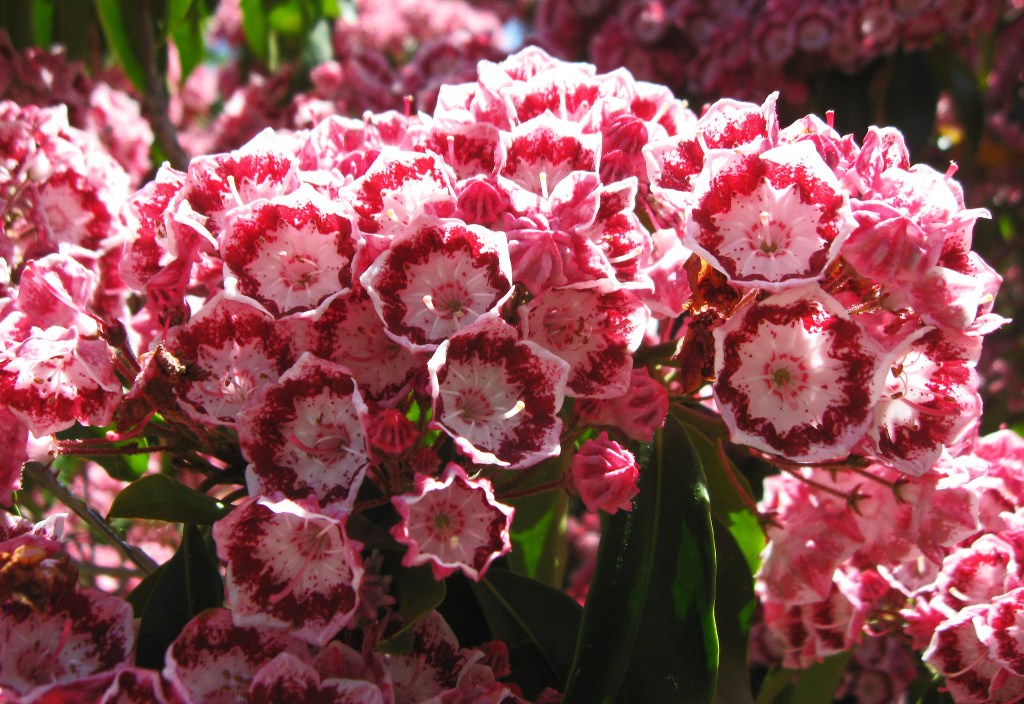
Kalmia latifolia is an evergreen shrub with striking clusters of pink and white flowers that bloom in the spring and early summer. It grows about 10-15 feet tall and can form dense thickets called “laurel hells” in the wild. All parts of the plant are highly toxic.
What It Looks Like
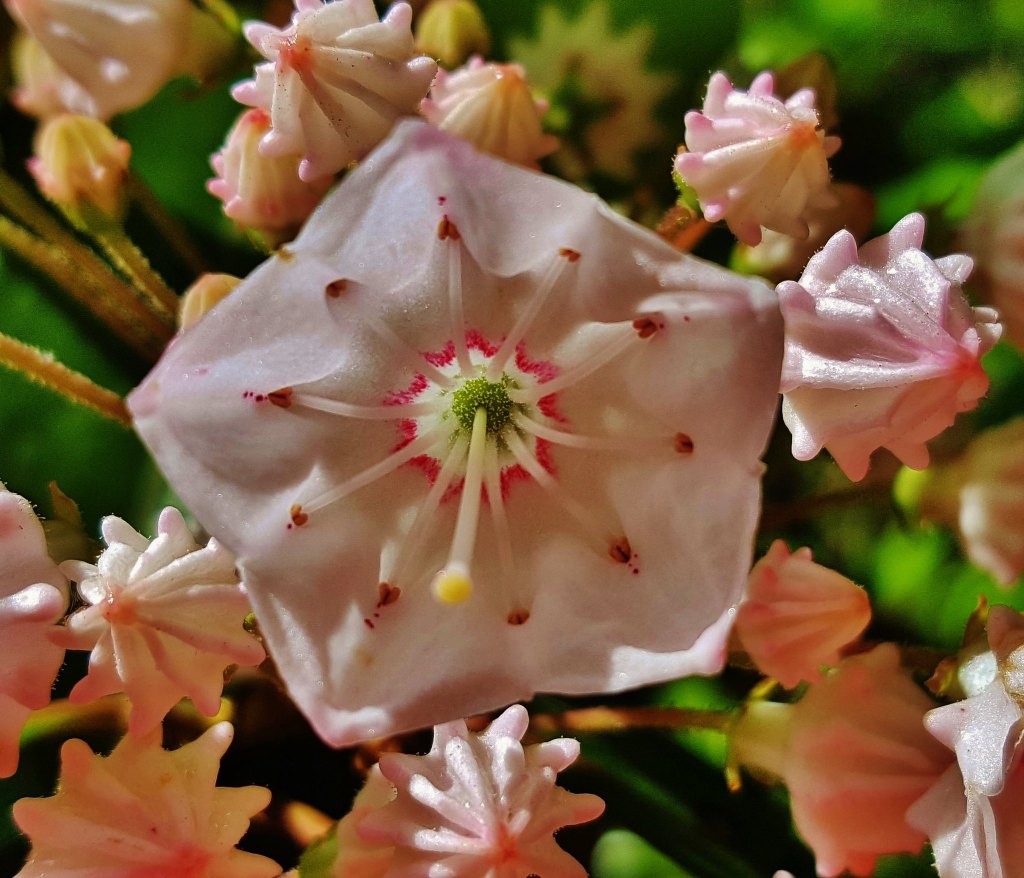
Mountain laurel has tough, glossy, deep green leaves resembling rhododendron leaves, with bowl-shaped flowers that look pentagonal or hexagonal when you look at them straight-on. The flower also has a unique pollen dispersal method (possibly only interesting to botany nerds) where it uses a spring-loaded stamen like a catapult when a bee or other pollinator lands on it, flinging pollen far beyond the petals.
Use
Mostly landscaping these days, though mountain laurel wood has been used for woodworking and crafts.
Where You’ll Find It
Mountain laurel is native to the eastern half of North America and it’s common in gardens — often in combination with poisonous neighbors like rhododendrons and azaleas.
The Poison
All parts of the mountain laurel contain andromedotoxin, arbutin and grayanotoxin, which can be deadly to humans and pets. The most common method of grayanotoxin poisoning in humans is through “mad honey” — honey made from the nectar of toxic plants. Some people cultivate this honey intentionally as a recreational drug (or traditional medicine) because it causes intoxication and hallucinations — but it’s hard to control the level of grayanotoxin, so there’s no safe dose. Mad honey can cause all the same nasty effects of its poisonous ingredients.
Symptoms of Poisoning
In humans and pets effects occur a few hours after ingestion. Milder symptoms include drooling, watering eyes, running nose, sweating, nausea, weakness, loss of appetite and muscle tremors. More serious cases include difficulty breathing, severe abdominal pain, diarrhea, vomiting, seizures, irregular heart rate and cardiac failure.
Ruby Madder’s Recommendation
Like other poisonous shrubs that don’t produce anything that resembles edible fruit, mountain laurel should be pretty safe in most places. Handle with care when pruning (and never burn the cuttings) and make sure small children know to leave it alone. Also, don’t mess with mad honey because there’s no way to know if you’ll have interesting hallucinations or an excruciating death.
 Ruby Madder's Field Guide to Poisonous Plants
Leave a comment