The Plant
Nerium oleander — commonly known as oleander or sometimes just nerium — is a flowering shrub that’s widely used in landscaping. It belongs to a family of plants called Apocynaceae, or “dog bane,” which should tell you all you need to know: Anything with “bane” in the name is likely to be poisonous.
What It Looks Like
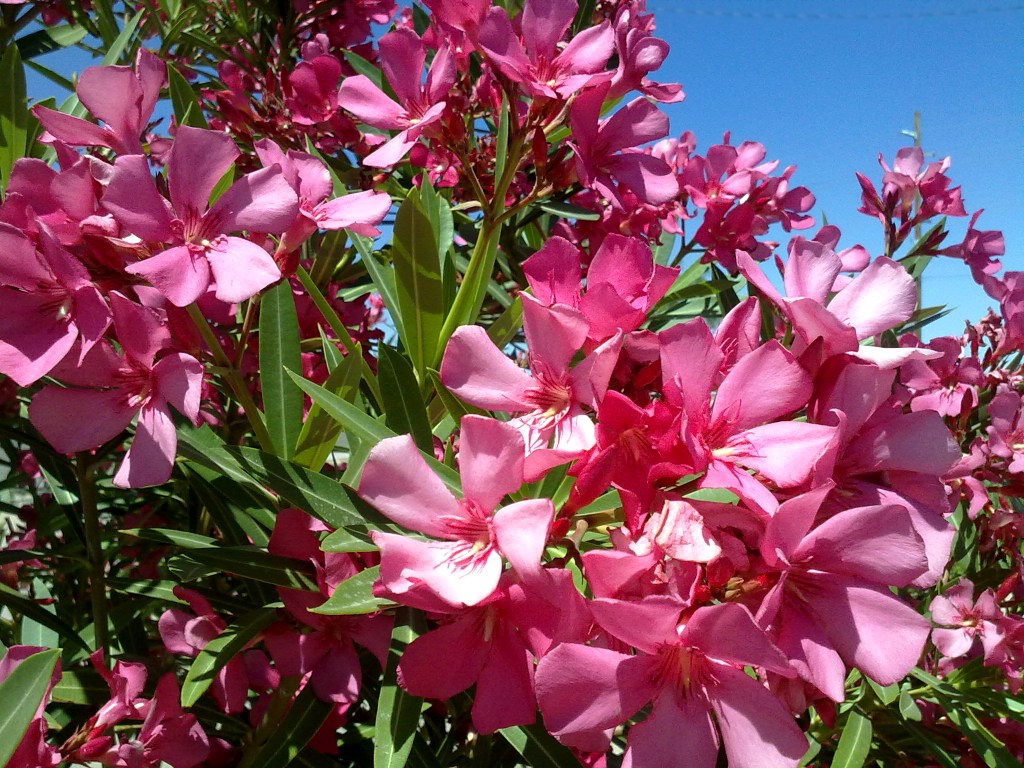
Oleanders have been cultivated all over the world, resulting in a range of colors, shapes and sizes from 3 to 20 feet tall. Five-petaled clusters of large flowers range from white and pale yellow to pretty much every possible shade of pink and some are variegated, or striped. They have long, narrow leaves with a smooth, leathery texture.
Use
In warm climates they’re popular in landscaping because they’re evergreen, with dense foliage that makes good hedges. Oleanders are large, fast-growing shrubs that are heat- and drought-resistant.
Where You’ll Find It
Oleanders prefer a subtropical or Mediterranean climate and are well-suited to the Southern U.S., though some hardier varieties are found farther north. They’re common in California and along the Pacific coast.
The Poison
Oleanders contain toxic cardiac glycosides including oleandrin, oleandrigenin, digitoxigenin, oleondroside and neriin. All parts of the plant are toxic and even honey made from the nectar can be deadly. The plant’s sap can cause severe skin irritation in small doses and blindness if it gets in your eye.
Symptoms of Poisoning
Cardiac glycosides affect the heart, causing decreased and irregular heart rate, low blood pressure, circulatory problems, dizziness and weakness. Oleanders also cause the usual gastrointestinal poisoning symptoms of vomiting, diarrhea, stomach pain and nausea, and they can cause dilated pupils, blurred vision, headache, fainting and seizures. Severe cases lead to respiratory failure, coma and death.
Ruby Madder’s Recommendation
As poisonous plants go, this one seems relatively safe to plant in your yard if you’re not a beekeeper and you don’t have small kids or plant-eating pets. It’s not easily mistaken for something edible and the poison is so bitter no one would want to eat it. Be careful with the sap, though — always wear gloves — and never burn the cuttings.
 Ruby Madder's Field Guide to Poisonous Plants
Leave a comment