The Plant
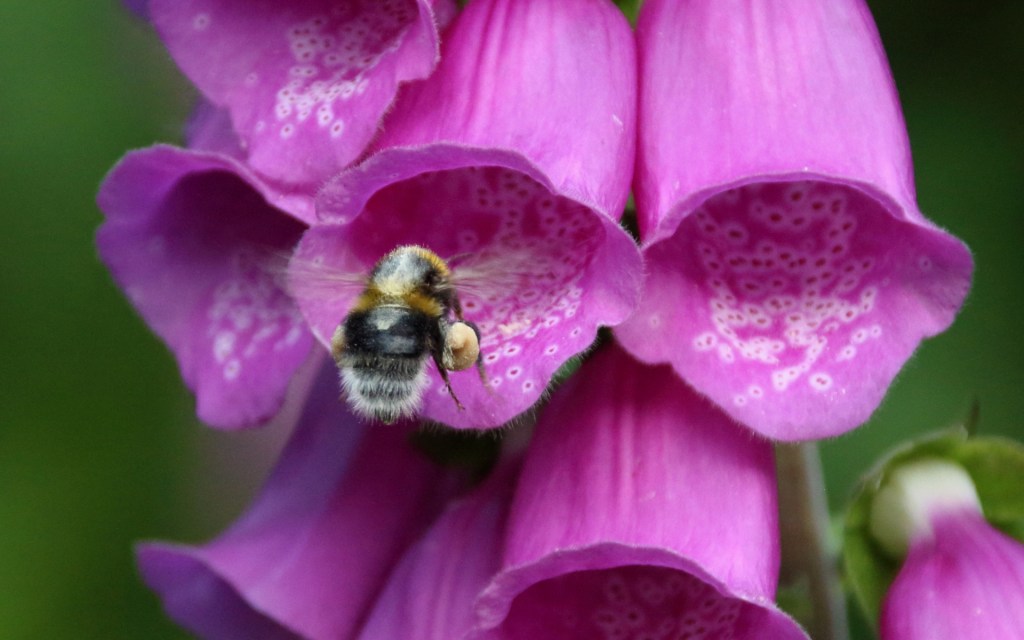
Digitalis is a genus of 20 flowering plants including the best known, Digitalis purpurea. The name “digitalis” is from the Latin word for “finger” because the tube-like flowers are sort of fingerlike (if you squint a lot or if you have really fat fingers). They’re sometimes called witch’s gloves, dead man’s bells or foxgloves (which is a much cuter mental picture). Bees also like to climb right up inside the blossoms, which is adorable.
What It Looks Like
This herbaceous biennial grows as a single (or occasionally double) spike with large, hairy oval leaves at the bottom and a cluster of bell-shaped flowers along the top. The flowers, which appear in early summer, are often pink or purple with speckles inside, but some varieties can be yellow or white. It can grow from 3-6 feet tall.

Use
This is a truly useful poisonous plant because it contains the cardiac glycosides digitoxin and digoxin, which are used to make heart medicine.
Where You’ll Find It
Digitalis is native to Europe but has naturalized in North America and grows wild. It’s hardy and can grow in acidic soil and waste land, so it’s sometimes seen as a weed. It’s also pretty enough that plenty of gardeners include it in their flowerbeds.
The Poison
Digitalis contains the cardiac glycosides digitoxin and digoxin, which disrupt the heart’s contractions. Though every part of the plant is dangerous — and the poison can be absorbed through the skin — fatal poisonings are rare, probably because it doesn’t look edible.
Symptoms of Poisoning
Digitalis poisoning provokes the standard get-it-out-now response to toxins: nausea, vomiting, diarrhea and abdominal pain. But like belladonna, it also messes with the victim’s sight: blurry vision, blue halos around objects, yellow and green discoloration, dilated pupils and hallucinations. In case that somehow sounds fun, it also causes convulsions, drooling, severe headache, fever, irregular pulse and yes, even death.
Ruby Madder’s Recommendation
Since it’s not easily mistaken for something delicious, it’s probably safe enough in a flowerbed if you don’t have small kids or pets that like to eat plants (it is toxic to cats and dogs, though, so keep that in mind). Wear gloves when you handle it and treat it with care.
 Ruby Madder's Field Guide to Poisonous Plants
Leave a comment