The Plant
Solanum dulcamara, also known as bittersweet nightshade or poisonberry, and its cousin Solanum nigrum, aka black nightshade, are in the same family as Atropa belladonna, better known as deadly nightshade. As you can probably guess from the names, they’re not good for you.
What It Looks Like
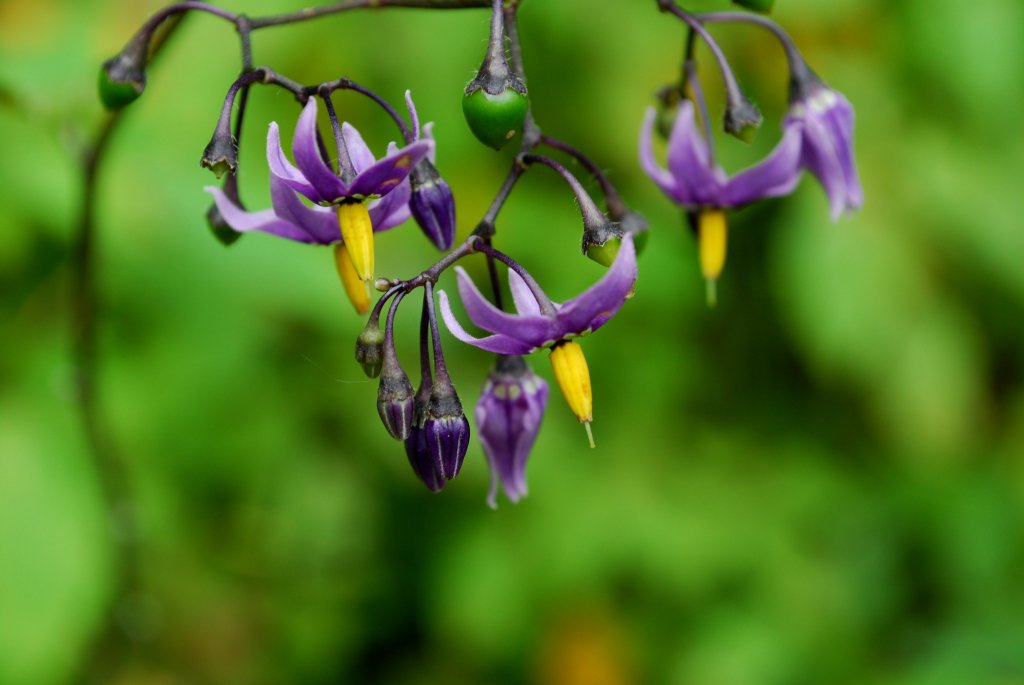
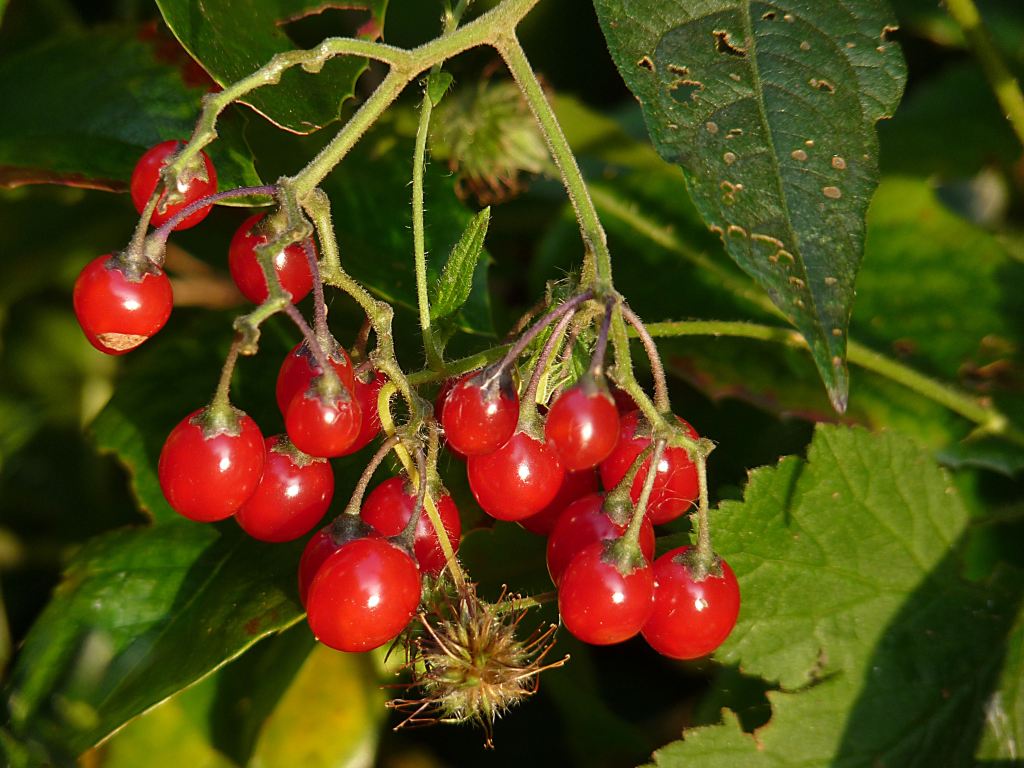
A sprawling vine or woody shrub with slender, purplish stems and small, smooth leaves with a purplish hue. Flowers are star-shaped with five pointed blueish-purple petals that curl away from a large, bright yellow anther protruding from the center. The flowers grow in drooping clusters and form into small round berries that change from green to orange to red.
Use
It was previously been used for various questionable-sounding medicinal purposes.
Where You’ll Find It
Bittersweet nightshade is native to Northern Africa, Europe and Asia but has spread all over. It grows wild throughout the northern United States in a variety of habitats. In the Great Lakes region it’s considered an invasive species. Some nightshades are used in landscaping, while others will creep into your gardens as weeds.
The Poison
Not quite as nasty as belladonna, the solanine in these nightshades could still make you very sick — or kill you if you’re especially unlucky or careless. Fatal human poisonings are rare, but grazing animals have been known to get sick from munching on nightshades.
Symptoms of Poisoning
With these nightshades symptoms may be delayed 6-12 hours and follow a more traditional route than the weird symptoms of belladonna. Bittersweet nightshade causes abdominal cramping, vomiting, diarrhea, fever, sweating, confusion and cardiac arrhythmia. If you consume enough to kill you, it’ll be heart attack or respiratory failure that does you in.
Ruby Madder’s Recommendation
Other nightshades are much less toxic but still have the distinctive purple/blue flowers, like potato bush plant (Lycianthes rantonnetii) and Chilean potato vine (Solanum crispum). There are edible varieties of nightshades, but why take the chance?
 Ruby Madder's Field Guide to Poisonous Plants
Leave a comment